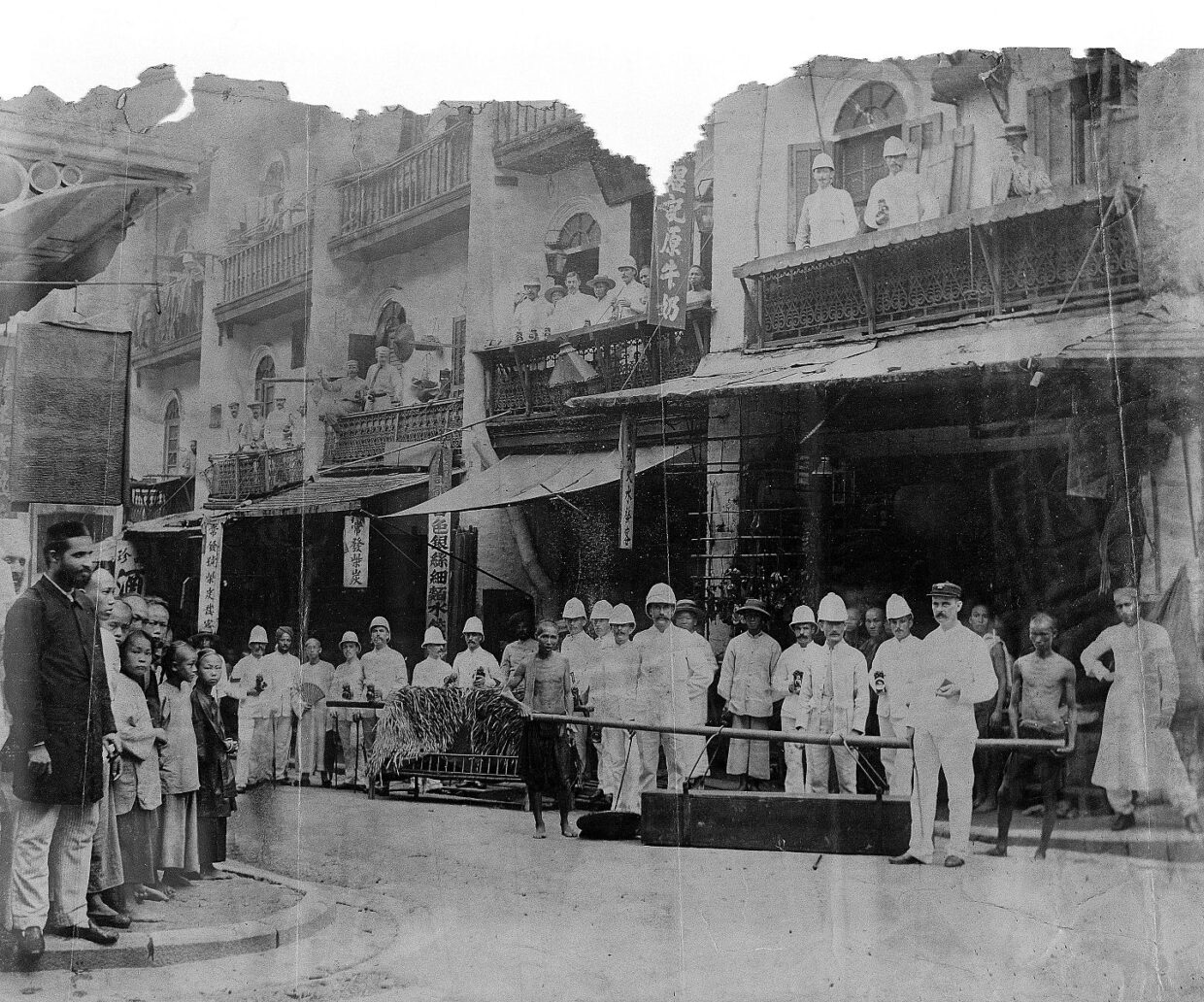


At the turn of the 20th Century, the third pandemic of the bubonic plague took place, impacting many lives and killing millions of people as it made its way around the world. This episode of Just Housing explores how the plague impacted the cities of Hong Kong and San Francisco.
The outbreak of the plague began in the 1890s in Western China and didn’t completely end until the 1950s. As it travelled around the world, the plague struck populations on every continent. It made its way to Hong Kong in 1894 and San Francisco soon after, in 1900. When the plague arrived in Hong Kong and San Francisco, chaos arose in both cities. Issues and questions of segregation, racism, and housing justice arose in the response from both the city officials and the general public.
While this episode delves into many topics surrounding the outbreaks of the plague in Hong Kong and San Francisco, it focuses on the role that issues of urban housing had in both outbreaks, and how the cities responded to housing problems that were brought to light during both outbreaks.
There were obvious trends in the populations most impacted by the plague, and by disease in general, in both Hong Kong and San Francisco. Poorer city dwellers who lived in crowded, poorly ventilated housing with inadequate sanitation were impacted by the plague at much higher rates. This communities that were particularly affected by the plague in both Hong Kong and San Francisco were targeted and looked down upon as disease-ridden, which highlighted the racism already endemic to both cities and the exacerbated the racial and class segregation that characterized them. It also caused the governments of both cities to attempt to take action to improve their housing issues and poor conditions in order to prevent future disease outbreaks in their cities.
During this episode of Just Housing, we explore the reaction from the governments of Hong Kong and San Francisco to the bubonic plague, and how they improved their urban housing problems. We delve into the substantial overlap between urban housing and public health to answer questions about both issues.
Works Cited
Craddock, Susan. 2000. City of Plagues: Disease, Poverty, and Deviance in San Francisco. Minneapolis: University of Minnesota Press.
Echenberg, Myron. 2010. Plague Ports : The Global Urban Impact of Bubonic Plague, 1894-1901. New York: NYU Press.
Kraut, Alan M. 1995. In Silent Travelers: Germs, Genes, and the Immigrant Menace, 78–98. Baltimore: Johns Hopkins University Press.
Nightingale, Carl. 2012. Segregation: A Global History of Divided Cities. Chicago: University of Chicago Press.
Pryor, E.G. “A Historical Review of Housing Conditions in Hong Kong.”Journal of the Hong Kong Branch of the Royal Asiatic Society, vol. 12, 1972, pp. 89–129.
Featured Image: Staffordshire Regiment cleaning plague houses; Hong Kong. Credit: Wellcome Library, London. Wellcome Images images@wellcome.ac.uk http://wellcomeimages.org Number 64: the Staffordshire Regiment cleaning plague houses Photograph circa 1894 Photographs, some of Cantlie, with Hong Kong street scenes. Copyrighted work available under Creative Commons Attribution only licence CC-BY 4.0 http://creativecommons.org/licenses/by/4.0/
