

Ellis Shapiro-Barnum, Riley Zook, Victoria Kalfas, Safia Gele
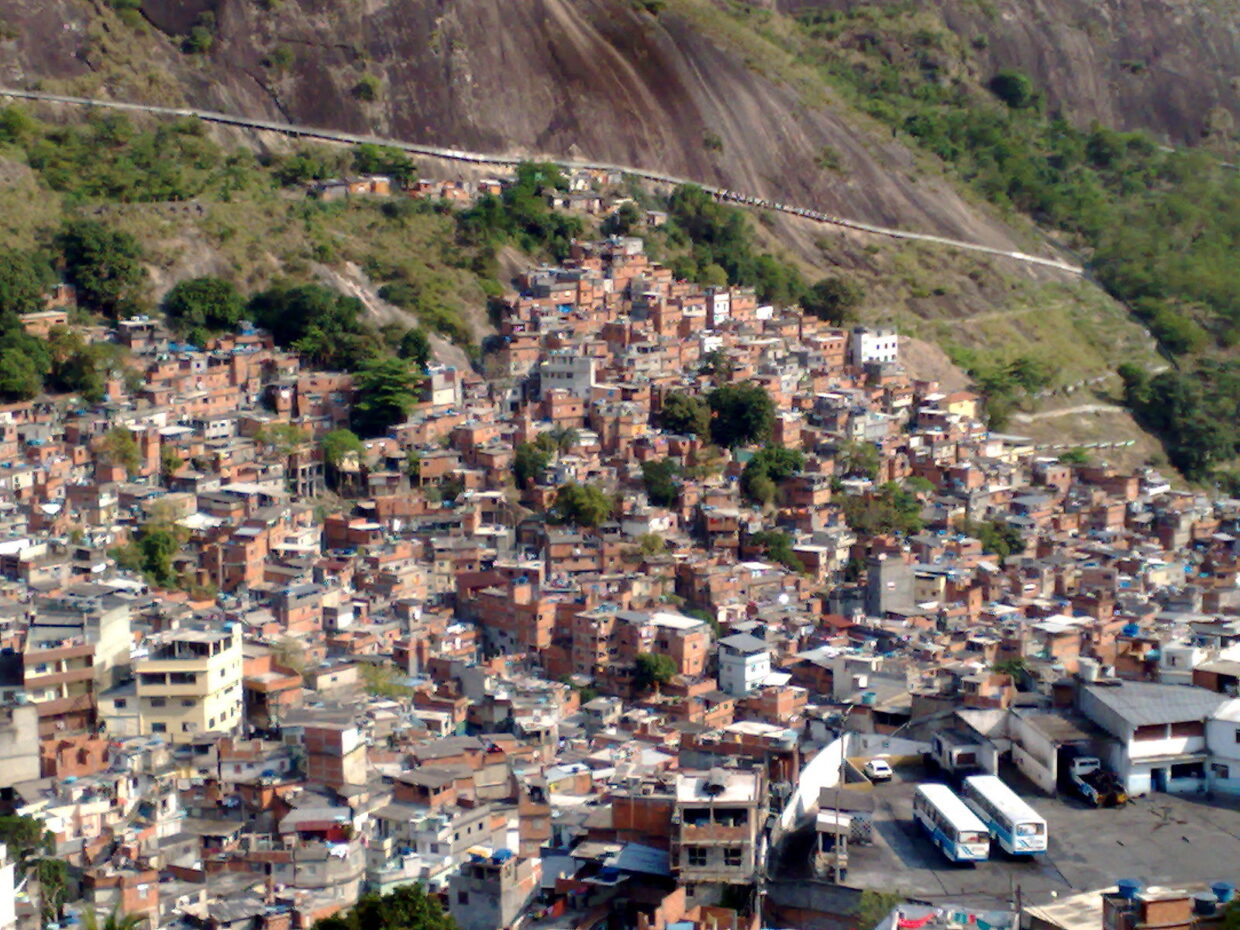
This episode of Just Housing traces the complex histories of exclusion in Brazil’s urban environments, focusing on the placemaking and self-governance efforts of residents living in favelas, which are informal settlements that coexist with more formal and better resourced neighborhoods in cities throughout Brazil and, in fact, the world. “Home life” in some favelas extends beyond the traditional four walls of a house or apartment to spill into the public spaces in and around the neighborhood. Not having all essential infrastructure within one’s home is common for those living in a favela, and some services must be sought elsewhere. Community Technology Centers (CTCs) and Local Area Network (LAN) Houses serve as state- and privately-owned hubs where the urban poor can take part in the digital world [1]. These centers that provide urban residents with access to social media allow us to understand housing justice in the context of digital inclusion; they help us see how favela residents empower their communities, distribute resources, and connect with one another with the internet?
This podcast examines the intersection of internet access and informal housing, especially the powerful ways in which internet cafes serve as extensions of the home and as a form of public space. We use the São Paulo favela of Paraisopolis as a case study for thinking about all these things together: social media, and the makeshift and not always legal constructions that so many people make their homes. An interview with a current resident, Dai, provides a personal history of favela life and some important insight into the individual experience of online activism using social media platforms [2]. We look to the history and growth of the use of internet and Community Technology Centers, or CTCs, and to social media, as alternative methods of community organization in the face of dangerous conditions and the dearth government services. In Paraisopolis, social media helps to fabricate not only social networks but also networks of resistance [3]. These networks are primarily made up of politically active residents who want to improve their community. They harness grassroots power for everything from public health campaigns to infrastructure access. The aim of this episode is to better understand informal housing through an examination of placemaking efforts. We conclude that favela residents leverage community networks of resistance to strengthen their citizens capacity for self-reliance and for their communities to survive and thrive..
[1] Ronaldo Lemos and Paula Martini, LAN Houses: A new wave of digital inclusion in Brazil; 16 September 2009. Publius Project
[2] Daiane Pereira, Interview, Virtual, April 2022
[3] https://www.un.org/en/coronavirus/brazil%E2%80%99s-favelas-organize-fight-covid-19
Cited Sources
Penglase, R. Ben. 2014. “‘To Live Here You Have to Know How to Live.’” In Living with Insecurity in a Brazilian Favela: Urban Violence and Daily Life, 3–33. New Brunswick, NJ: Rutgers University Press.
Arias, Enrique Desmond. 2004. “Faith in Our Neighbors: Networks and Social Order in Three Brazilian Favelas.” Latin American Politics and Society 46 (1): 1–38.
Márcio Siwi, “The Park and the Favela…” (a 2021 journal article by a historian of SP)
Fischer, Brodwyn, Bryan McCann, and Javier Auyero, eds. Cities from scratch: Poverty and informality in urban Latin America. Duke University Press, 2014.
Mion, V. (2018). Undergrowth Urbanism: The Role of User-Generated Practices in the Informal City. A Methodology for Analysis and Intervention Based on the Case Study of Paraisópolis in São Paulo. In: Petrillo, A., Bellaviti, P. (eds) Sustainable Urban Development and Globalization. Research for Development. Springer, Cham. https://doi.org/10.1007/978-3-319-61988-0_8
Medrado, A., Cabral, T., Souza, R. (2020). Favela Digital Activism: The Use of Social Media to Fight Oppression and Injustice in Brazil. In: Martens, C., Venegas, C., Sharupi Tapuy, E. (eds) Digital Activism, Community Media, and Sustainable Communication in Latin America. Palgrave Macmillan, Cham. https://doi.org/10.1007/978-3-030-45394-7_9
Nemer, David. “Wired mobile phones: the case of community technology centers in favelas of Brazil*.” Information Technology for Development 24 (2018): 461 – 481.
Nemer, David. “Going beyond the “t” in “ctc”: Social practices as care in community technology centers.” Information 9.6 (2018): 135.
Nemer, David. “Online favela: The use of social media by the marginalized in Brazil.” Information technology for development 22.3 (2016): 364-379.
Nemer, David. Favela Digital: The other side of technology/O outro lado da tecnologia. GSA Grafica e Editora, 2013.
Custódio, Leonardo. Favela media activism: Counterpublics for human rights in Brazil. Lexington Books, 2017.
